
Thank you for being curious
What Is SACSA?
Semi-autonomous community supported agriculture. It is a mouthful, but it describes something specific: a local food network where the production infrastructure is shared, partially automated, and managed by the community it feeds rather than a distant corporation.
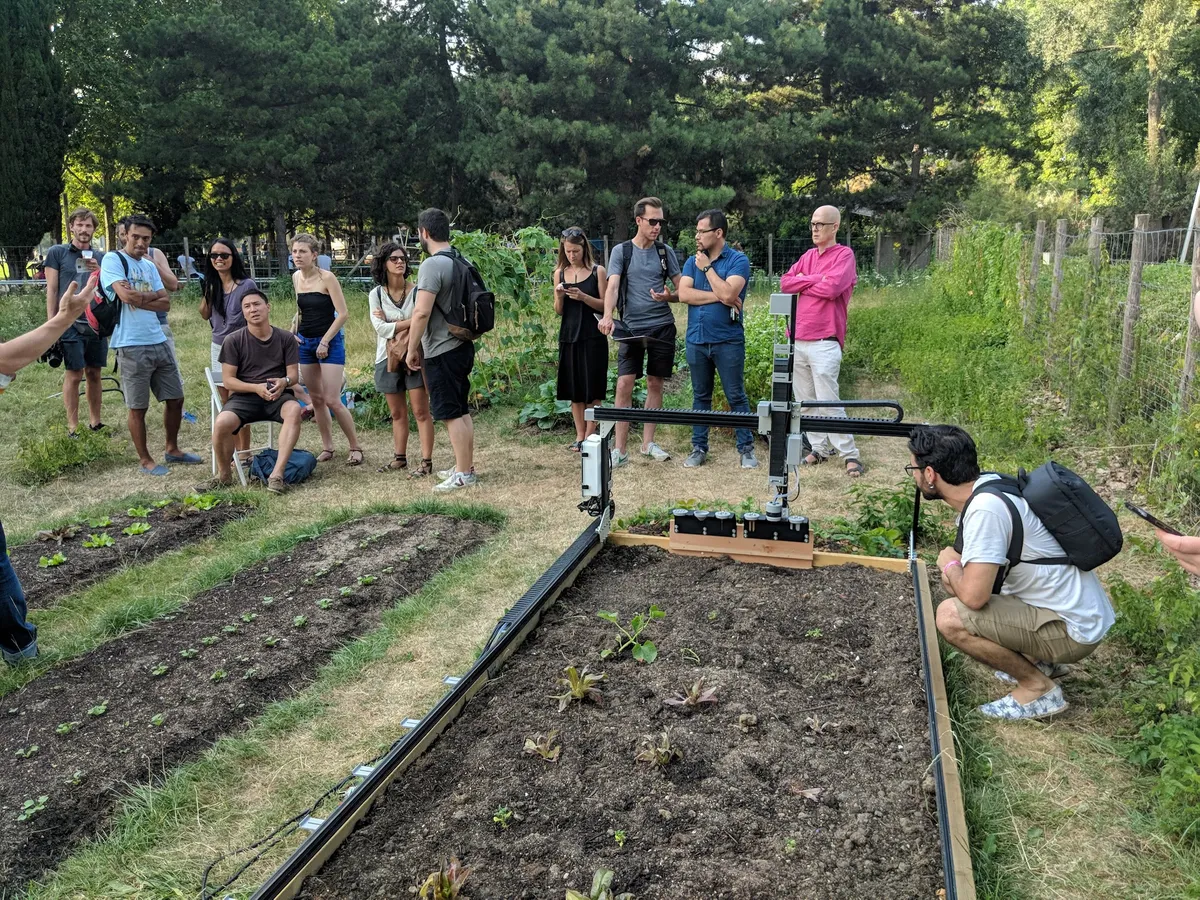
1. The Term, From the Right End
A community supported agriculture arrangement is simple: a group of people pool resources to support a farm, and the farm feeds them back. No middleman, no commodity pricing. The people who eat the food are directly connected to the people who grow it. This has worked for decades.
But it has a ceiling, because it still requires the labor farming has always required, and that labor is scarce, expensive, and physically demanding. Semi-autonomous means the system handles the routine, the repetitive physical work of planting, watering, and monitoring, while a person handles the judgment calls. Automation does not replace the grower. It removes the volume of repetitive work that keeps these systems small.
Put the two together and you get a designed system: shared infrastructure, local production, automation where it genuinely helps, human judgment where it matters. Every SACSA looks different, because every community, climate, and set of goals is different. What makes it work is not any single piece of technology. It is the decision to design the whole system intentionally.
2. Why Automation Isn’t Enough by Itself
There is a fantasy version of this: buy the hardware, connect it to WiFi, get food. It is a fantasy not because the hardware fails, but because growing food for a community requires far more than a machine that plants on a schedule.
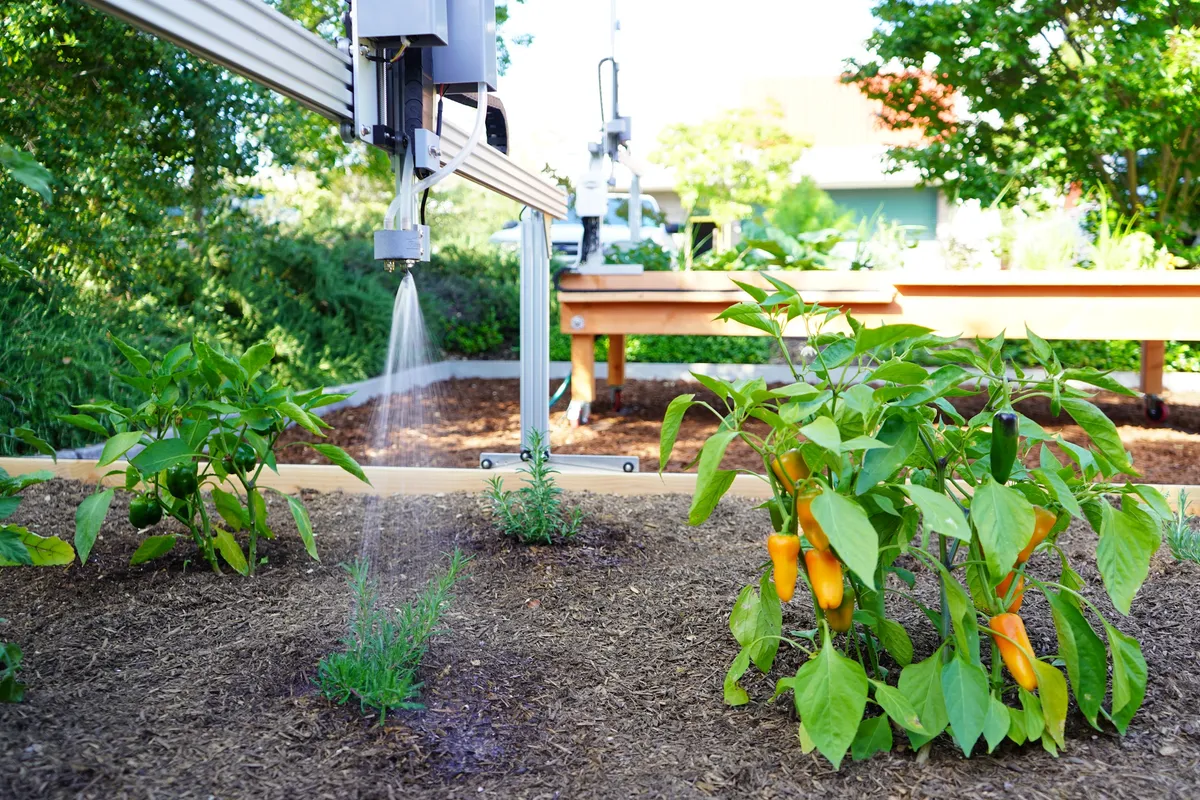
Hardware is good at consistency, the same task reliably, at the right interval, without getting tired. What it cannot do is decide what to grow, coordinate who shows up for the edge cases, or absorb a disagreement between neighbors about how surplus gets shared. Those are coordination problems, and they require judgment, communication, and a shared set of agreements. No sensor package ships with those.
Most people who get excited about food automation budget for hardware. Almost nobody budgets for the coordination layer, the agreements, the communication, the distribution logistics. That layer is the difference between an automated garden that feeds people and an expensive piece of irrigation equipment that runs fine and serves nobody. The automation amplifies what you design. If the design is sound, it runs with less labor. If the design is missing, it makes the gap obvious faster.
3. The Stack: What a Real System Looks Like
The components are real and accessible today. A SACSA system has three layers:
- Production. The hardware that touches plants. FarmBot precision gardening is the most proven option at residential and small community scale; mobile harvest robotics and compact algae photobioreactors extend what is possible into harvest and dense, year-round nutrition.
- Sensing and data. Soil moisture, temperature, nutrient levels, yield, logged over time so you stop guessing and start knowing what your specific plot needs. The hardware is commodity-level; the value is in the data pipeline.
- Orchestration. The layer nobody sells you, that connects production to the community it serves: what gets planted and why, how harvest is allocated, how new households join, what happens when a plot goes offline. A SACSA without an orchestration layer is a garden. With one, it is infrastructure.
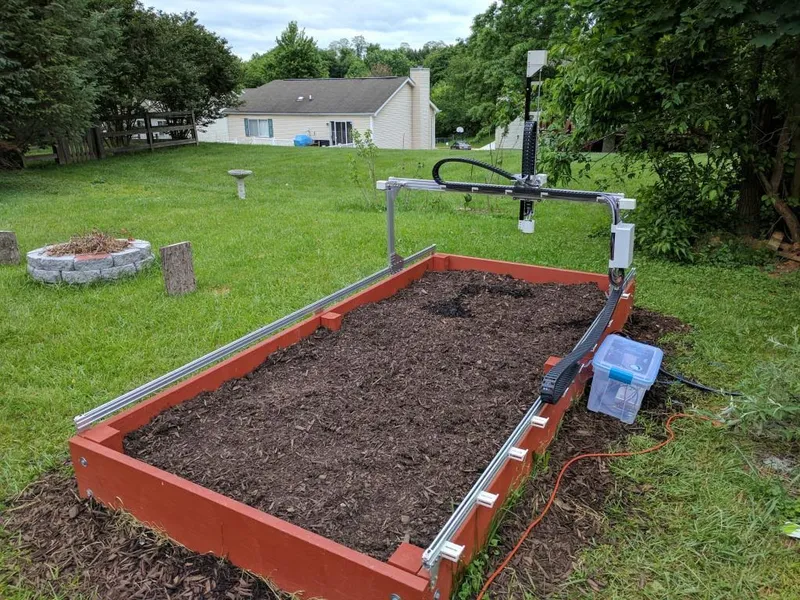
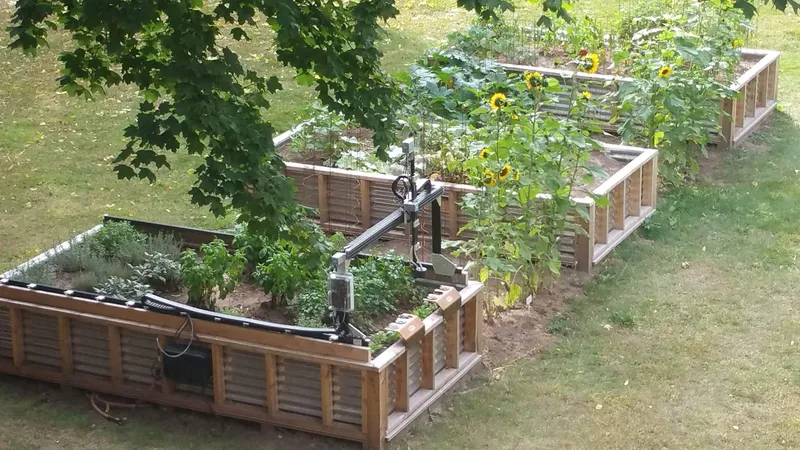
A first pilot does not need to be ambitious. The goal is to prove the loop, production feeds real people through a real distribution process, and the system learns from what happens. For hardware cost ranges across different scales, see the budgets & ROI breakdown. Every real system is priced after a conversation about the specific situation.
4. See It Working
This is not speculative hardware. Every machine below exists, ships or shipped as a product, and does the work on video.
5. Who This Is For (And Who It Isn’t)
This is not for everyone, and pretending otherwise wastes everyone’s time. You are the right person for this work if you think about food as infrastructure, not just sustenance. You want to do something real at the scale you can actually affect, your household, your neighborhood, your land. You are willing to invest in infrastructure, and you are comfortable that this takes design work up front.
You are the wrong person if you are primarily looking for the cheapest way to grow your own food. There is nothing wrong with wanting cheap, but the most economical path to a home garden is a packet of seeds and a shovel. A SACSA is a designed system, not a product you can add to a cart. The question that cuts through almost everything: are you trying to solve a food access problem, or trying to buy a food tech product? If it is the first, we can almost certainly help.
6. How the Advising Works
Every engagement starts the same way, with a conversation about your actual situation: what exists, what you want to produce, who you are trying to feed, what you have already tried. We are not trying to sell you anything in that first conversation. We are trying to figure out whether SACSA is the right frame for your situation. Sometimes it is not, and saying so early saves everyone time.
If it fits, the work goes deeper from there: vendor evaluation, hardware scoping, budget modeling, site assessment, distribution logistics, community structure. You bring a problem, we work through it together, and you leave with something concrete, answers and decisions you can act on, not a report that goes in a drawer.
That is where the conversation actually starts. We read every submission and respond personally.