
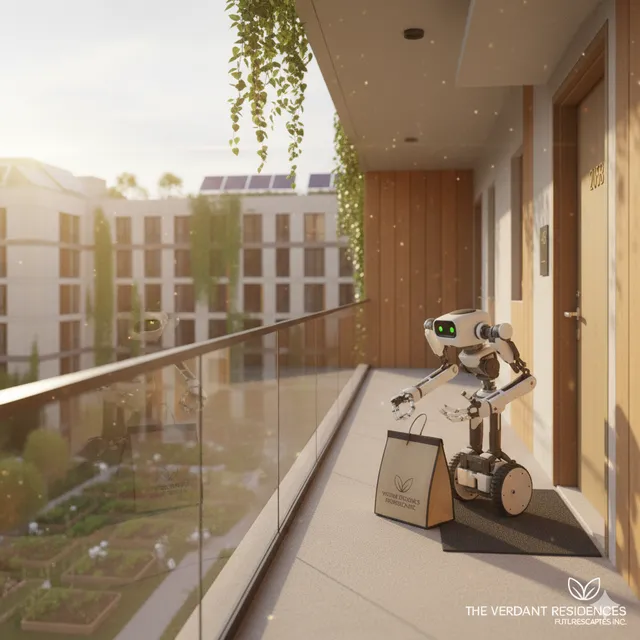
Space planning
Modeling layouts for raised beds, containers, and micro-farms to optimize footprint and access.
Johnny Autoseed is an open research concept documenting what small-scale automation can actually do in real spaces. If you have land, facilities, or community projects where a lightweight trial or documentation sprint could add value, we'd be glad to compare notes.
Best fit: partners who already have a site, a concrete question, and tolerance for experimentation.
We bring curiosity, documentation rigor, and a willingness to test ideas in real-world constraints. Our approach is collaborative: partners define the problems, we help design experiments and gather data.
We're interested in testing and documenting these areas with partners who have suitable sites or existing projects.
Modeling layouts for raised beds, containers, and micro-farms to optimize footprint and access.
Testing low-cost LED setups and light schedules for different crops and indoor environments.
Comparing simple watering systems, fertigation, and soil mixes under real-world conditions.
Low-cost sensors and documentation methods to track crop performance and environmental factors.
Identifying tasks where simple robotics or automation could reduce labor in small-scale settings.
The ALOHA 2 stack is the readable bimanual rig behind much of the recent ALOHA research line; policy tooling such as LeRobot often targets the same imitation-learning workflows. We use it as context when asking what teleop data would cost for harvest-adjacent tasks.
Creating shareable reports, datasets, and practical guides from trial results.
, In a robotics team post, Google DeepMind highlighted two systems aimed at contact-rich, dexterous behavior: ALOHA Unleashed (bimanual imitation learning) and DemoStart (simulation-first curriculum learning for multi-fingered hands). The summary below is adapted from that announcement; follow the links for the full papers and project pages.
Bimanual manipulation from human demonstrations, pushing past single-arm pick-and-place toward tasks that need two coordinated arms and delicate contact.
Reinforcement learning in simulation with a demonstration-led curriculum, targeting dexterous multi-finger hands where every extra joint makes control harder.
For Johnny Autoseed, this line of work matters because harvest, wash-up, and kitchen-adjacent tasks are exactly where cheap arms fail first: contact, clutter, and coordination between two manipulators. It does not change our DIY-first stance, it clarifies what the research frontier looks like while FarmBot-class bed automation matures.
Published March 2025, AhaRobot is a fully open-source dual-arm mobile manipulator with a total bill of materials near $1,000, roughly 1/15 the cost of comparable commercial platforms. It combines a differential-drive base, two foldable SCARA arms, and a ROS 2 control stack with transformer-based behavior cloning for autonomous task execution. For Johnny Autoseed, this represents the most practical near-term hardware path for mobile food processing and harvest-adjacent manipulation.
A complete mobile bimanual robot you can build for ~$1,000 using off-the-shelf components and freely available CAD files.
Teleoperation via AprilTag-tracked handles and foot pedals, with imitation learning for autonomous replication of demonstrated tasks.
For Johnny Autoseed, AhaRobot is the most relevant near-term mobile manipulation platform: its $1,000 BOM is within reach for pilot deployments, its SCARA geometry suits produce handling, and its open-source stack means we can extend it for harvest and food-processing tasks without vendor lock-in. The detailed component cost breakdown is on the Budgets page.
Lab-perfect conditions don't exist in backyards or community spaces. We're interested in studying how crops perform when real people manage them in real environments, complete with all the messiness that entails.
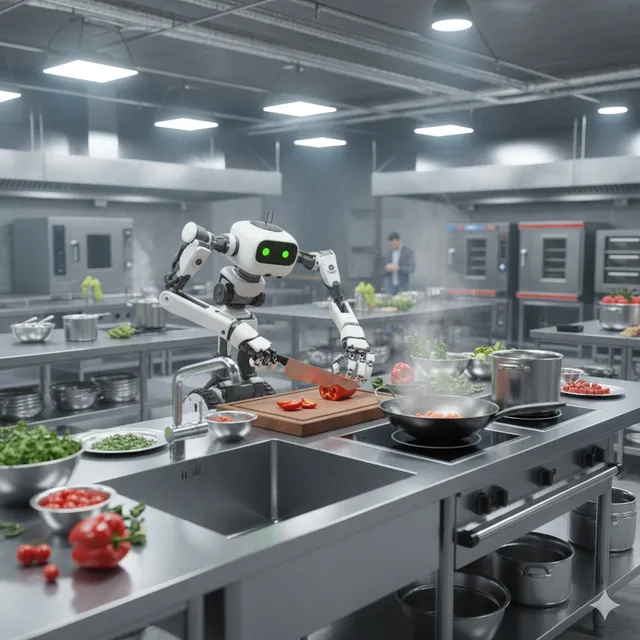
These are the types of collaborations we're looking for; if you have a similar space or project, we'd love to talk.
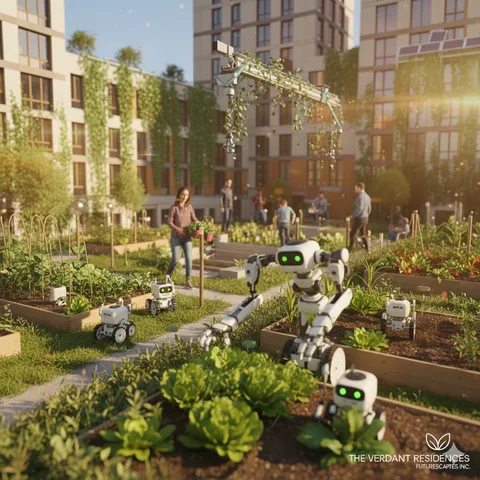
Working with building owners or residents to test small-scale indoor growing in underused spaces like basements, storage rooms, or garages.
Partnering with property managers, housing co-ops, or schools to study rooftop or courtyard growing with simple raised-bed setups.
Collaborating with makerspaces, community centers, or food-justice groups to embed trials into existing educational or outreach programs.
These are the types of questions that interest us; if you're working on similar problems or have space to test ideas, we'd welcome the conversation.
Can quick-turn crops work reliably in small indoor spaces with minimal intervention?
How do you move produce a few blocks instead of a few states?
Can indoor trials serve dual purposes: producing food and teaching STEM?
Have a space or project where we could explore these questions together? We'd welcome a conversation about potential collaboration.
Adjust the sliders to model a research trial in your space. Estimates use real data from our plant database of 40 crops.
Estimates assume beginner-friendly crops, standard growing conditions, and data from our open plant database. Grocery value uses fixed per-category retail prices (which vary by region and season); CO₂ offset assumes a rough ~0.5 kg saved per kg of food not trucked from an industrial farm; meal counts assume ~0.4 kg of food per serving. These are directional approximations, not measured figures. Actual results vary with climate, soil, prices, and care consistency.
All estimates, ranges, and comparisons on this site are compiled from publicly available datasets, vendor specifications, and industry research. Johnny Autoseed has not experimentally or independently verified them; they may be incomplete, rounded, inconsistent across sources, or superseded by newer releases.
Treat every figure as directional context only. Confirm material details against primary sources and apply your own judgment before purchases, budgets, partnerships, fundraising, or operational commitments.
Johnny Autoseed LLC offers informational and advisory design services, and publishes open research alongside them. The research, budgets, and hardware figures on this site are documentation, not an offer to sell hardware, and nothing here is an offer to sell securities or a warranty of any result. Nothing on this site is investment, legal, tax, medical, or other professional advice.
Some pages, prototypes, or drafts may involve AI-assisted tooling. We aim for accuracy, but errors can occur. If something material looks wrong, contact us and we will work to correct it.